From £2,580 to £4,950 in One Month: A Food E-commerce Facebook Ads Case Study
Revenue from Facebook ads rose 92% in a single month, with the same advertising budget and without recording a single new piece of content.
When sales from ecommerce Facebook ads stop growing, most business owners think of investing more. Sometimes that is the right call. Much more often, the problem sits in how the existing money is spent.
Figures are converted from euros at roughly €1 = £0.85 and rounded. The campaigns ran in Italy.
This case study is about an online shop I started working with in the summer. In July, the campaigns generated about £2,580 in revenue. In August, about £4,950. That is an increase of 92% in a single month, with the same advertising budget and no new content.
The starting point: active campaigns, results below potential
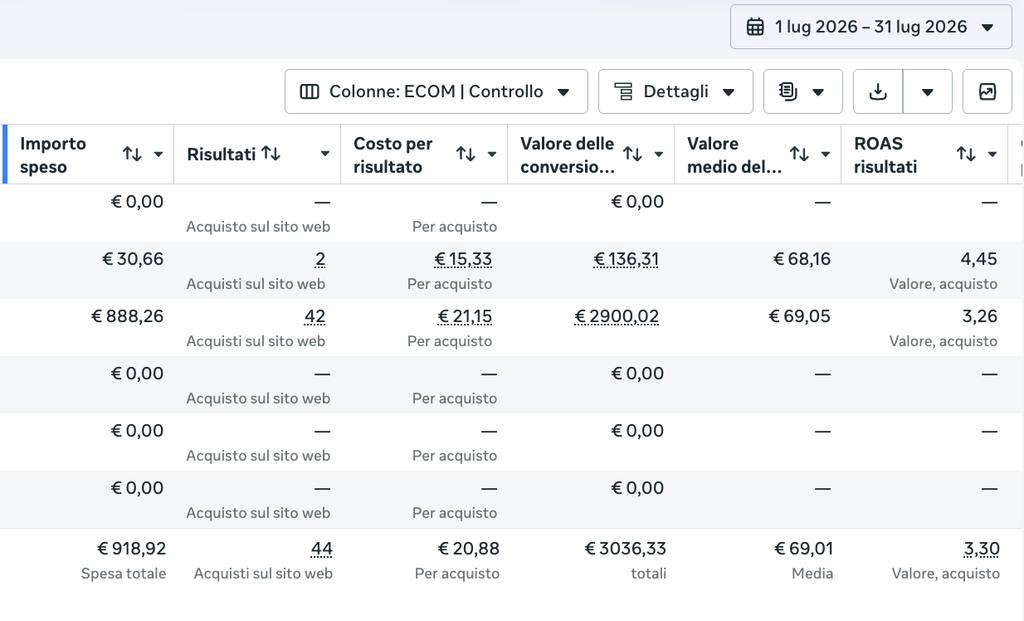
When the client entrusted me with their Facebook ads, they already had active campaigns in their Business Manager. They ran, spent money and brought some sales. Nothing was obviously wrong, and that is the most insidious situation: as long as something comes in, it is hard to notice how much you are leaving on the table.
Monthly ad spend: about £780. ROAS in July: 3.30.
Instead of starting from scratch or asking the client to shoot new videos, I chose to work on what existed. The budget stayed the same, and so did the content. The goal was to make every pound invested work where it had the best chance of becoming an order.
Why raising the budget is rarely the right first move
If a campaign wastes part of its spend on audiences or placements that do not buy, raising the budget also raises the waste, in the same proportion. The cost per purchase stays high and the shop’s margin shrinks.
Optimising before scaling has a concrete advantage: when you do invest more, every extra pound starts from a base that works.
The 3 levers we worked on
1. The ad sets
The ad set is the level where you decide who sees your ads, where and with what budget. A structure that is too fragmented splits the data across many small ad sets and slows the algorithm’s learning. A structure that is too consolidated makes it hard to see what works. We reviewed the existing structure to concentrate the budget on the ad sets with the best purchase signals and to give the algorithm enough data to optimise.
2. Meta’s Advantage+ settings
Advantage+ is the set of automations with which Meta decides on its own placements, audience and some creative variations. In many accounts it works well. In others, left completely free, it spreads part of the spend over placements that bring cheap views and almost no sales.
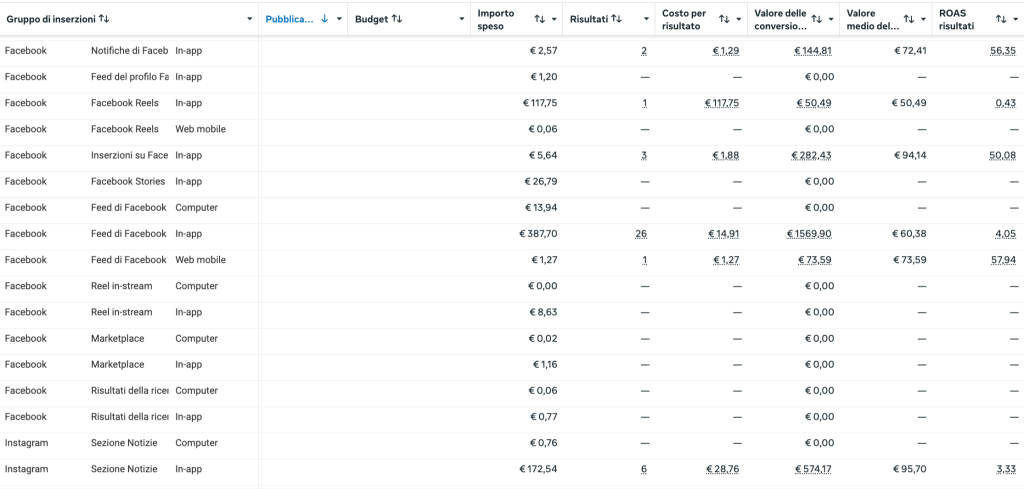
Analysing the data by placement, we identified those that absorbed budget without generating purchases, and recalibrated the settings. The campaign stopped paying for unproductive space and focused its spend where potential customers were most likely to buy.
3. The creatives
New content was not on the table, so we worked on what was available: which creatives to push, which to pause and how to match them to the right placements. A video that does well in Stories may do much less in the Feed, and the other way round. Giving each creative the right space is often worth as much as producing a new one.
The results: +92% in a month, and a new record in September
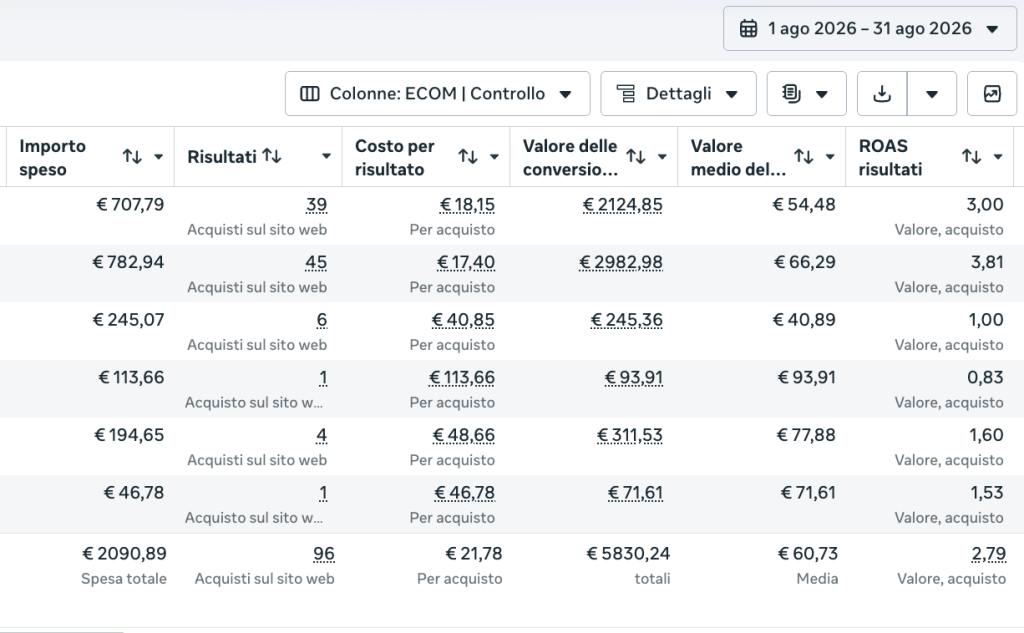
July: about £2,580 in revenue from Facebook ads.
August: about £4,950, with the same budget and the same content.
September then beat August and set a new sales record for the shop.
The figure that matters most to me is staying power. A single peak may depend on a promotion or a lucky period. Two consecutive months of growth suggest that the campaign structure now works better.
How to tell whether your campaigns are wasting budget
Every account has a different story, but some signals repeat. Do you know how much revenue each placement generates, or do you only look at the overall campaign figure? Were your Advantage+ settings chosen deliberately, or left as the defaults? Are your creatives updated based on data, or do they stay active until someone remembers them?
If you hesitated on at least one of these questions, there is probably room to improve before touching the budget. If you want to see how much you should spend, read my guide to the cost of Facebook ads in the UK.

Frequently asked questions about this case study
Can you increase sales from Facebook ads without spending more?
Yes, when the current campaign has room to optimise structure, placements or creatives. This case is an example. If the account is already well optimised, growth comes from budget, offer or new content.
Is Advantage+ always worth using?
It depends on the account. Meta’s automations can deliver excellent results, but it pays to check the data by placement and step in when part of the spend performs poorly.
How long before optimisation shows results?
In this case the improvement showed in the first month of work. Timing varies with the account’s data volume and the available budget.
Do you want to know whether your advertising is losing money? The quickest way is to message me directly on WhatsApp. I work with a limited number of projects so that I can follow each account myself, so I reply personally.
Want results like these for your business?
Tell me about your business on WhatsApp. I reply personally, and we look at your numbers together.
Talk to me on WhatsApp →